Interested in learning more about what we do, working with us, or have any questions we can answer? Please fill out the form and let’s start talking.


Email Us
Resources
From decades of building systemic intelligence in organizations and communities, we’ve assembled resources to help you tackle complex problems more effectively. These videos, articles, and interactive tools are organized into four essential categories that together build your capacity to create lasting change. Each set develops a critical aspect of SysQ—from shifting your mindset to see systems differently, to following a proven learning process, to strengthening specific thinking skills, to mastering visualization tools that make the invisible visible. Whether you’re addressing organizational challenges, community issues, or global concerns, mastering these complementary resources will transform how you and your team approach complex challenges and implement high-leverage solutions.

Mind
mindset Test
MINDSET

Performance Framing Graph (PFG)
A trend over time graph — or reference behavior pattern — of the system behavior(s) you want to understand and improve by applying SysQ.
About
Performance Framing Graphs are powerful visual tools that map the interests, concerns, and performance metrics of diverse stakeholder groups within a system. These graphs reveal interconnections among different perspectives, expanding everyone's field of vision beyond their immediate concerns. By visually representing each stakeholder's key metrics over time, Performance Framing Graphs (PFGs) can:
-
facilitate cross-boundary collaboration
-
highlight potential tensions and synergies
-
support the development of more inclusive strategies
PFGs are particularly valuable in addressing complex adaptive challenges that span organizational boundaries because they translate diverse perspectives into actionable insights, balanced scorecards, and comprehensive performance indicators that reflect the whole system rather than isolated parts.

Case Studies
Private Sector | Production and Order Fulfillment for a Multinational Engine Company
A cross-siloed management team at an engine production company was assigned the task of improving production. The concerning issue was that average time between receiving an order and fulfilling it had been steadily climbing (with seasonality) over the past few years.
Highlights
Lorem ipsum dolor sit amet, consectetur adipiscing elit, sed do eiusmod tempor incididunt ut labore et dolore magna aliqua. Ut enim ad minim veniam, quis nostrud exercitation ullamco laboris nisi ut aliquip ex ea commodo consequat. Duis aute irure dolor in reprehenderit in voluptate velit esse cillum dolore eu fugiat nulla pariatur. Excepteur sint occaecat cupidatat non proident, sunt in culpa qui officia deserunt mollit anim id est laborum.
Lorem ipsum dolor sit amet, consectetur adipiscing elit, sed do eiusmod tempor incididunt ut labore et dolore magna aliqua. Ut enim ad minim veniam, quis nostrud exercitation ullamco laboris nisi ut aliquip ex ea commodo consequat. Duis aute irure dolor in reprehenderit in voluptate velit esse cillum dolore eu fugiat nulla pariatur. Excepteur sint occaecat cupidatat non proident, sunt in culpa qui officia deserunt mollit anim id est laborum.

Public Sector | Example of Public Sector
Lorem ipsum dolor sit amet, consectetur adipiscing elit, sed do eiusmod tempor incididunt ut labore et dolore magna aliqua. Ut enim ad minim veniam, quis nostrud exercitation ullamco laboris nisi ut aliquip ex ea commodo consequat. Duis aute irure dolor in reprehenderit in voluptate velit esse cillum dolore eu fugiat nulla pariatur. Excepteur sint occaecat cupidatat non proident, sunt in culpa qui officia deserunt mollit anim id est laborum.
Highlights
Lorem ipsum dolor sit amet, consectetur adipiscing elit, sed do eiusmod tempor incididunt ut labore et dolore magna aliqua. Ut enim ad minim veniam, quis nostrud exercitation ullamco laboris nisi ut aliquip ex ea commodo consequat. Duis aute irure dolor in reprehenderit in voluptate velit esse cillum dolore eu fugiat nulla pariatur. Excepteur sint occaecat cupidatat non proident, sunt in culpa qui officia deserunt mollit anim id est laborum.
Lorem ipsum dolor sit amet, consectetur adipiscing elit, sed do eiusmod tempor incididunt ut labore et dolore magna aliqua. Ut enim ad minim veniam, quis nostrud exercitation ullamco laboris nisi ut aliquip ex ea commodo consequat. Duis aute irure dolor in reprehenderit in voluptate velit esse cillum dolore eu fugiat nulla pariatur. Excepteur sint occaecat cupidatat non proident, sunt in culpa qui officia deserunt mollit anim id est laborum.

Value
Describe the value of using the mindset attribute
-
Lorem ipsum dolor sit amet, consectetur adipiscing elit, sed do eiusmod tempor incididunt ut labore et dolore magna aliqua. Ut enim ad minim veniam, quis nostrud exercitation ullamco laboris nisi ut aliquip ex ea commodo consequat. Duis aute irure dolor in reprehenderit in voluptate velit esse cillum dolore eu fugiat nulla pariatur. Excepteur sint occaecat cupidatat non proident, sunt in culpa qui officia deserunt mollit anim id est laborum.
-
Lorem ipsum dolor sit amet, consectetur adipiscing elit, sed do eiusmod tempor incididunt ut labore et dolore magna aliqua. Ut enim ad minim veniam, quis nostrud exercitation ullamco laboris nisi ut aliquip ex ea commodo consequat. Duis aute irure dolor in reprehenderit in voluptate velit esse cillum dolore eu fugiat nulla pariatur. Excepteur sint occaecat cupidatat non proident, sunt in culpa qui officia deserunt mollit anim id est laborum.
-
Lorem ipsum dolor sit amet, consectetur adipiscing elit, sed do eiusmod tempor incididunt ut labore et dolore magna aliqua. Ut enim ad minim veniam, quis nostrud exercitation ullamco laboris nisi ut aliquip ex ea commodo consequat. Duis aute irure dolor in reprehenderit in voluptate velit esse cillum dolore eu fugiat nulla pariatur. Excepteur sint occaecat cupidatat non proident, sunt in culpa qui officia deserunt mollit anim id est laborum.
How to Build
Instructions for the Individual
Follow the steps below or download the following link
- Step Name
Lorem ipsum dolor sit amet, consectetur adipiscing elit, sed do eiusmod tempor incididunt ut labore et dolore magna aliqua. Ut enim ad minim veniam, quis nostrud exercitation ullamco laboris nisi ut aliquip ex ea commodo consequat. Duis aute irure dolor in reprehenderit in voluptate velit esse cillum dolore eu fugiat nulla pariatur. Excepteur sint occaecat cupidatat non proident, sunt in culpa qui officia deserunt mollit anim id est laborum.
-
Lorem ipsum dolor sit amet, consectetur adipiscing elit, sed do eiusmod tempor incididunt ut labore et dolore magna aliqua. Ut enim ad minim veniam, quis nostrud exercitation ullamco laboris nisi ut aliquip ex ea commodo consequat. Duis aute irure dolor in reprehenderit in voluptate velit esse cillum dolore eu fugiat nulla pariatur. Excepteur sint occaecat cupidatat non proident, sunt in culpa qui officia deserunt mollit anim id est laborum.
-
Lorem ipsum dolor sit amet, consectetur adipiscing elit, sed do eiusmod tempor incididunt ut labore et dolore magna aliqua. Ut enim ad minim veniam, quis nostrud exercitation ullamco laboris nisi ut aliquip ex ea commodo consequat. Duis aute irure dolor in reprehenderit in voluptate velit esse cillum dolore eu fugiat nulla pariatur. Excepteur sint occaecat cupidatat non proident, sunt in culpa qui officia deserunt mollit anim id est laborum.
-
Lorem ipsum dolor sit amet, consectetur adipiscing elit, sed do eiusmod tempor incididunt ut labore et dolore magna aliqua. Ut enim ad minim veniam, quis nostrud exercitation ullamco laboris nisi ut aliquip ex ea commodo consequat. Duis aute irure dolor in reprehenderit in voluptate velit esse cillum dolore eu fugiat nulla pariatur. Excepteur sint occaecat cupidatat non proident, sunt in culpa qui officia deserunt mollit anim id est laborum.
- Step Name
Lorem ipsum dolor sit amet, consectetur adipiscing elit, sed do eiusmod tempor incididunt ut labore et dolore magna aliqua. Ut enim ad minim veniam, quis nostrud exercitation ullamco laboris nisi ut aliquip ex ea commodo consequat. Duis aute irure dolor in reprehenderit in voluptate velit esse cillum dolore eu fugiat nulla pariatur. Excepteur sint occaecat cupidatat non proident, sunt in culpa qui officia deserunt mollit anim id est laborum.
-
Lorem ipsum dolor sit amet, consectetur adipiscing elit, sed do eiusmod tempor incididunt ut labore et dolore magna aliqua. Ut enim ad minim veniam, quis nostrud exercitation ullamco laboris nisi ut aliquip ex ea commodo consequat. Duis aute irure dolor in reprehenderit in voluptate velit esse cillum dolore eu fugiat nulla pariatur. Excepteur sint occaecat cupidatat non proident, sunt in culpa qui officia deserunt mollit anim id est laborum.
-
Lorem ipsum dolor sit amet, consectetur adipiscing elit, sed do eiusmod tempor incididunt ut labore et dolore magna aliqua. Ut enim ad minim veniam, quis nostrud exercitation ullamco laboris nisi ut aliquip ex ea commodo consequat. Duis aute irure dolor in reprehenderit in voluptate velit esse cillum dolore eu fugiat nulla pariatur. Excepteur sint occaecat cupidatat non proident, sunt in culpa qui officia deserunt mollit anim id est laborum.
-
Lorem ipsum dolor sit amet, consectetur adipiscing elit, sed do eiusmod tempor incididunt ut labore et dolore magna aliqua. Ut enim ad minim veniam, quis nostrud exercitation ullamco laboris nisi ut aliquip ex ea commodo consequat. Duis aute irure dolor in reprehenderit in voluptate velit esse cillum dolore eu fugiat nulla pariatur. Excepteur sint occaecat cupidatat non proident, sunt in culpa qui officia deserunt mollit anim id est laborum.
Instructions for Teams
Follow the steps below or download the following link
- Step Name
Lorem ipsum dolor sit amet, consectetur adipiscing elit, sed do eiusmod tempor incididunt ut labore et dolore magna aliqua. Ut enim ad minim veniam, quis nostrud exercitation ullamco laboris nisi ut aliquip ex ea commodo consequat. Duis aute irure dolor in reprehenderit in voluptate velit esse cillum dolore eu fugiat nulla pariatur. Excepteur sint occaecat cupidatat non proident, sunt in culpa qui officia deserunt mollit anim id est laborum.
-
Lorem ipsum dolor sit amet, consectetur adipiscing elit, sed do eiusmod tempor incididunt ut labore et dolore magna aliqua. Ut enim ad minim veniam, quis nostrud exercitation ullamco laboris nisi ut aliquip ex ea commodo
consequat. Duis aute irure dolor in reprehenderit in voluptate velit esse cillum dolore eu fugiat nulla pariatur. Excepteur sint occaecat cupidatat non proident, sunt in culpa qui officia deserunt mollit anim id est laborum. -
Lorem ipsum dolor sit amet, consectetur adipiscing elit, sed do eiusmod tempor incididunt ut labore et dolore magna aliqua. Ut enim ad minim veniam, quis nostrud exercitation ullamco laboris nisi ut aliquip ex ea commodo
consequat. Duis aute irure dolor in reprehenderit in voluptate velit esse cillum dolore eu fugiat nulla pariatur. Excepteur sint occaecat cupidatat non proident, sunt in culpa qui officia deserunt mollit anim id est laborum. -
Lorem ipsum dolor sit amet, consectetur adipiscing elit, sed do eiusmod tempor incididunt ut labore et dolore magna aliqua. Ut enim ad minim veniam, quis nostrud exercitation ullamco laboris nisi ut aliquip ex ea commodo
consequat. Duis aute irure dolor in reprehenderit in voluptate velit esse cillum dolore eu fugiat nulla pariatur. Excepteur sint occaecat cupidatat non proident, sunt in culpa qui officia deserunt mollit anim id est laborum.
- Step Name
Lorem ipsum dolor sit amet, consectetur adipiscing elit, sed do eiusmod tempor incididunt ut labore et dolore magna aliqua. Ut enim ad minim veniam, quis nostrud exercitation ullamco laboris nisi ut aliquip ex ea commodo consequat. Duis aute irure dolor in reprehenderit in voluptate velit esse cillum dolore eu fugiat nulla pariatur. Excepteur sint occaecat cupidatat non proident, sunt in culpa qui officia deserunt mollit anim id est laborum.
-
Lorem ipsum dolor sit amet, consectetur adipiscing elit, sed do eiusmod tempor incididunt ut labore et dolore magna aliqua. Ut enim ad minim veniam, quis nostrud exercitation ullamco laboris nisi ut aliquip ex ea commodo
consequat. Duis aute irure dolor in reprehenderit in voluptate velit esse cillum dolore eu fugiat nulla pariatur. Excepteur sint occaecat cupidatat non proident, sunt in culpa qui officia deserunt mollit anim id est laborum. -
Lorem ipsum dolor sit amet, consectetur adipiscing elit, sed do eiusmod tempor incididunt ut labore et dolore magna aliqua. Ut enim ad minim veniam, quis nostrud exercitation ullamco laboris nisi ut aliquip ex ea commodo
consequat. Duis aute irure dolor in reprehenderit in voluptate velit esse cillum dolore eu fugiat nulla pariatur. Excepteur sint occaecat cupidatat non proident, sunt in culpa qui officia deserunt mollit anim id est laborum. -
Lorem ipsum dolor sit amet, consectetur adipiscing elit, sed do eiusmod tempor incididunt ut labore et dolore magna aliqua. Ut enim ad minim veniam, quis nostrud exercitation ullamco laboris nisi ut aliquip ex ea commodo
consequat. Duis aute irure dolor in reprehenderit in voluptate velit esse cillum dolore eu fugiat nulla pariatur. Excepteur sint occaecat cupidatat non proident, sunt in culpa qui officia deserunt mollit anim id est laborum.
Connections to Other SysQ Components
Describe the value of using the mindset attribute
- SysQ Mindset
Lorem ipsum dolor sit amet, consectetur adipiscing elit, sed do eiusmod tempor incididunt ut labore et dolore magna aliqua. Ut enim ad minim veniam, quis nostrud exercitation ullamco laboris nisi ut aliquip ex ea commodo consequat. Duis aute irure dolor in reprehenderit in voluptate velit esse cillum dolore eu fugiat nulla pariatur. Excepteur sint occaecat cupidatat non proident, sunt in culpa qui officia deserunt mollit anim id est laborum. Learn more
- SysQ Process
Lorem ipsum dolor sit amet, consectetur adipiscing elit, sed do eiusmod tempor incididunt ut labore et dolore magna aliqua. Ut enim ad minim veniam, quis nostrud exercitation ullamco laboris nisi ut aliquip ex ea commodo consequat. Duis aute irure dolor in reprehenderit in voluptate velit esse cillum dolore eu fugiat nulla pariatur. Excepteur sint occaecat cupidatat non proident, sunt in culpa qui officia deserunt mollit anim id est laborum. Learn more
- SysQ Thinking
Description. Lorem ipsum dolor sit amet, consectetur adipiscing elit, sed do eiusmod tempor incididunt ut labore et dolore magna aliqua. Ut enim ad minim veniam, quis nostrud exercitation ullamco laboris nisi ut aliquip ex ea commodo consequat. Duis aute irure dolor in reprehenderit in voluptate velit esse cillum dolore eu fugiat nulla pariatur. Excepteur sint occaecat cupidatat non proident, sunt in culpa qui officia deserunt mollit anim id est laborum.
This tool is essential for these steps:
- Step Name
Lorem ipsum dolor sit amet, consectetur adipiscing elit, sed do eiusmod tempor incididunt ut labore et dolore magna aliqua. Ut enim ad minim veniam, quis nostrud exercitation ullamco laboris nisi ut aliquip ex ea commodo consequat. Duis aute irure dolor in reprehenderit in voluptate velit esse cillum dolore eu fugiat nulla pariatur. Excepteur sint occaecat cupidatat non proident, sunt in culpa qui officia deserunt mollit anim id est laborum.Learn more
- Step Name
Lorem ipsum dolor sit amet, consectetur adipiscing elit, sed do eiusmod tempor incididunt ut labore et dolore magna aliqua. Ut enim ad minim veniam, quis nostrud exercitation ullamco laboris nisi ut aliquip ex ea commodo consequat. Duis aute irure dolor in reprehenderit in voluptate velit esse cillum dolore eu fugiat nulla pariatur. Excepteur sint occaecat cupidatat non proident, sunt in culpa qui officia deserunt mollit anim id est laborum. Learn more
- Step Name
Lorem ipsum dolor sit amet, consectetur adipiscing elit, sed do eiusmod tempor incididunt ut labore et dolore magna aliqua. Ut enim ad minim veniam, quis nostrud exercitation ullamco laboris nisi ut aliquip ex ea commodo consequat. Duis aute irure dolor in reprehenderit in voluptate velit esse cillum dolore eu fugiat nulla pariatur. Excepteur sint occaecat cupidatat non proident, sunt in culpa qui officia deserunt mollit anim id est laborum. Learn more
Conclusion
Lorem ipsum dolor sit amet, consectetur adipiscing elit, sed do eiusmod tempor incididunt ut labore et dolore magna aliqua. Ut enim ad minim veniam, quis nostrud exercitation ullamco laboris nisi ut aliquip ex ea commodo consequat. Duis aute irure dolor in reprehenderit in voluptate velit esse cillum dolore eu fugiat nulla pariatur. Excepteur sint occaecat cupidatat non proident, sunt in culpa qui officia deserunt mollit anim id est laborum.
Lorem ipsum dolor sit amet, consectetur adipiscing elit, sed do eiusmod tempor incididunt ut labore et dolore magna aliqua. Ut enim ad minim veniam, quis nostrud exercitation ullamco laboris nisi ut aliquip ex ea commodo consequat. Duis aute irure dolor in reprehenderit in voluptate velit esse cillum dolore eu fugiat nulla pariatur. Excepteur sint occaecat cupidatat non proident, sunt in culpa qui officia deserunt mollit anim id est laborum.
Additional Resources
Books
Book title as link | Description
Articles
Article title as link | Description
Online Resources
Resource title as link | Description

Process
🛣️ The Process Redux: The Learning Journey Takes the High Road
PROCESS
Attribute of Process
Lorem ipsum dolor sit amet, consectetur adipiscing elit, sed do eiusmod tempor incididunt ut labore et dolore magna aliqua
About
Overview of the attribute. Lorem ipsum dolor sit amet, consectetur adipiscing elit, sed do eiusmod tempor incididunt ut labore et dolore magna aliqua. Ut enim ad minim veniam, quis nostrud exercitation ullamco laboris nisi ut aliquip ex ea commodo consequat. Duis aute irure dolor in reprehenderit in voluptate velit esse cillum dolore eu fugiat nulla pariatur. Excepteur sint occaecat cupidatat non proident, sunt in culpa qui officia deserunt mollit anim id est laborum.
We tend to focus on the present moment. Most PhDs are awarded for studying a single weed in a field and analyzing it in great detail.
Good systems models, on the other hand, take a broader perspective.
They look at the big picture, analyzing long-term patterns and trends to find ways to improve things over time.
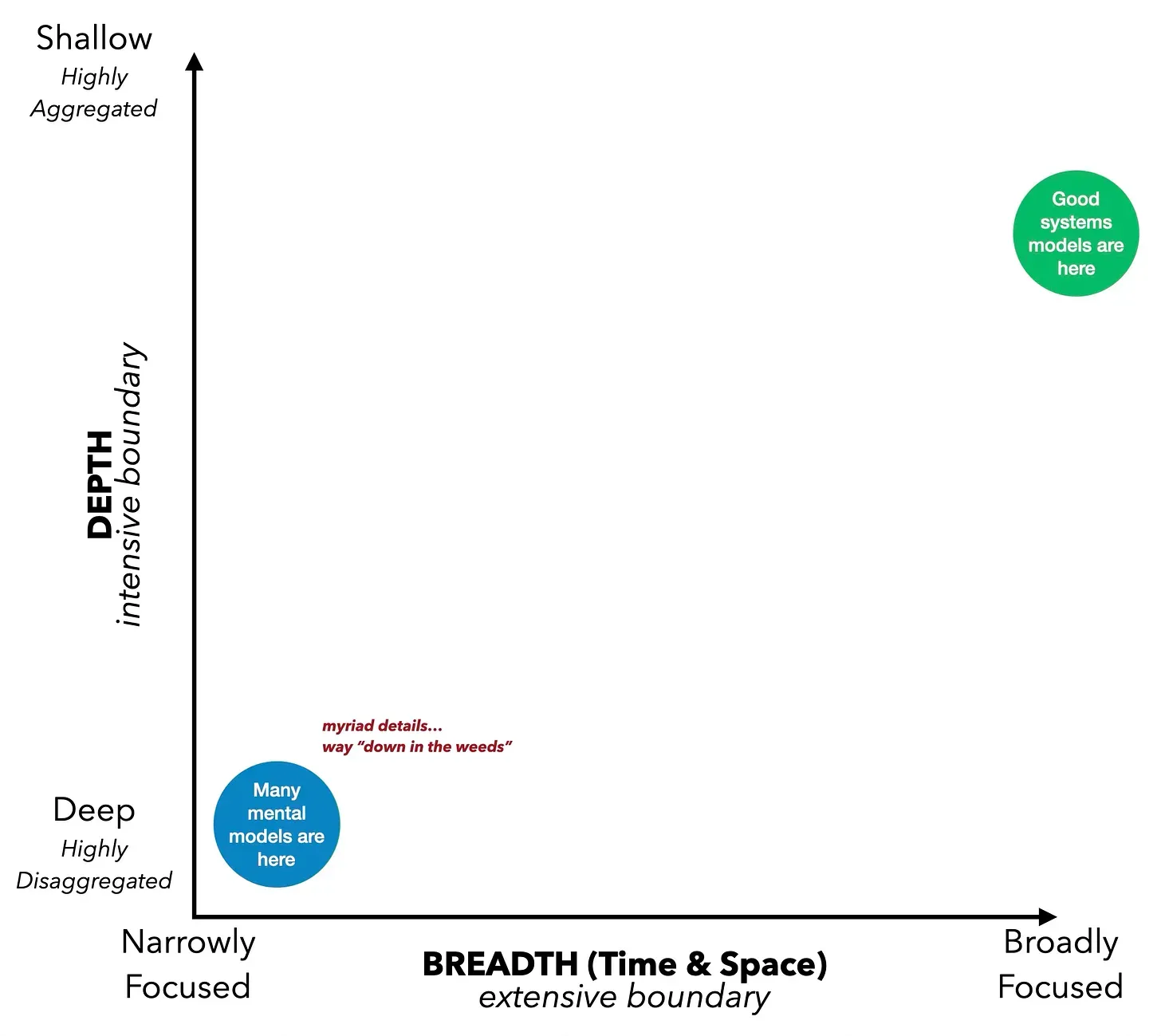
Most mental models are confined to a narrow window of time and space. We usually focus on a few days or weeks, while the system operates over years. Similarly, we usually concentrate on our department or division, but to effectively manage the system, we need to consider multiple organizations, agencies, groups, and stakeholders.
HOW DEEP (DETAILED)?
You may have heard that adaptive leaders should step back from the action and take a look at the big picture. It can feel like we’re stuck in the weeds, and it’s hard to see the shared values and beliefs that guide our interactions with others. Instead of focusing on individual differences, it’s helpful to apply a broader context (FOREST Thinking) — see how forces and conditions in the ecosystem shape our actions. Public health professionals deal with large numbers of people, while marketing departments manage diverse customer groups.
HOW TO BUILD GOOD SYSTEMS MODELS
Good systems models are in the upper right. They see broadly to understand the forces across the full ecosystem responsible for the performance issues you want to improve. The goal is to generate good systems models. The challenge? How to get there!
There are two roads we could take to reach the destination of a useful systems model.
Road 1: Representing the System
Road 1 is the most popular path. It tries to make a complete map of everything from the start. Teams of experts with specific knowledge often try to put all their knowledge together into a detailed picture. But this can make the map too complicated — like the Afghanistan Counterinsurgency map — with too much detail. This pursuit of a complete system map puts us on the Low Road (Road 1).
The Low Road starts with myopic perspectives and ideas and tries to put them together into a coherent whole. Since we have so much detail and the task is so big, this process only makes things more complicated. If we’re lucky, the mapping project ends up with a map as complex as the counterinsurgency map — a tangled web of information. More likely, the mapping effort stops, leaving us lacking comprehension and insight.
The problem is trying to map the whole system instead of just understanding the cause of the behavior (performance measure) we want to improve. Remember the slinky. If our performance goal is to significantly reduce the Slinky’s oscillation, we only need to focus on the physics of the spring. We can leave out colors and shapes — in fact, we must exclude them to reduce complexity. For usability, we must eliminate parts of the full system that don’t contribute to the performance we want to improve.
“Details are confusing.
It is only by selection, by elimination, by emphasis, that we get at the real meaning of things.”
—Georgia O’Keefe
Road 2: Get Up Out of the Weeds
Road 2 is the wisest path. It is the High Road path.1
The High Road starts by setting the big picture vision for system performance. Then, you can decide what you want to see improve. Next, you can build a simple causal map, pick and change a system archetype, or make a simulation model. These tools help you understand what causes that behavior.
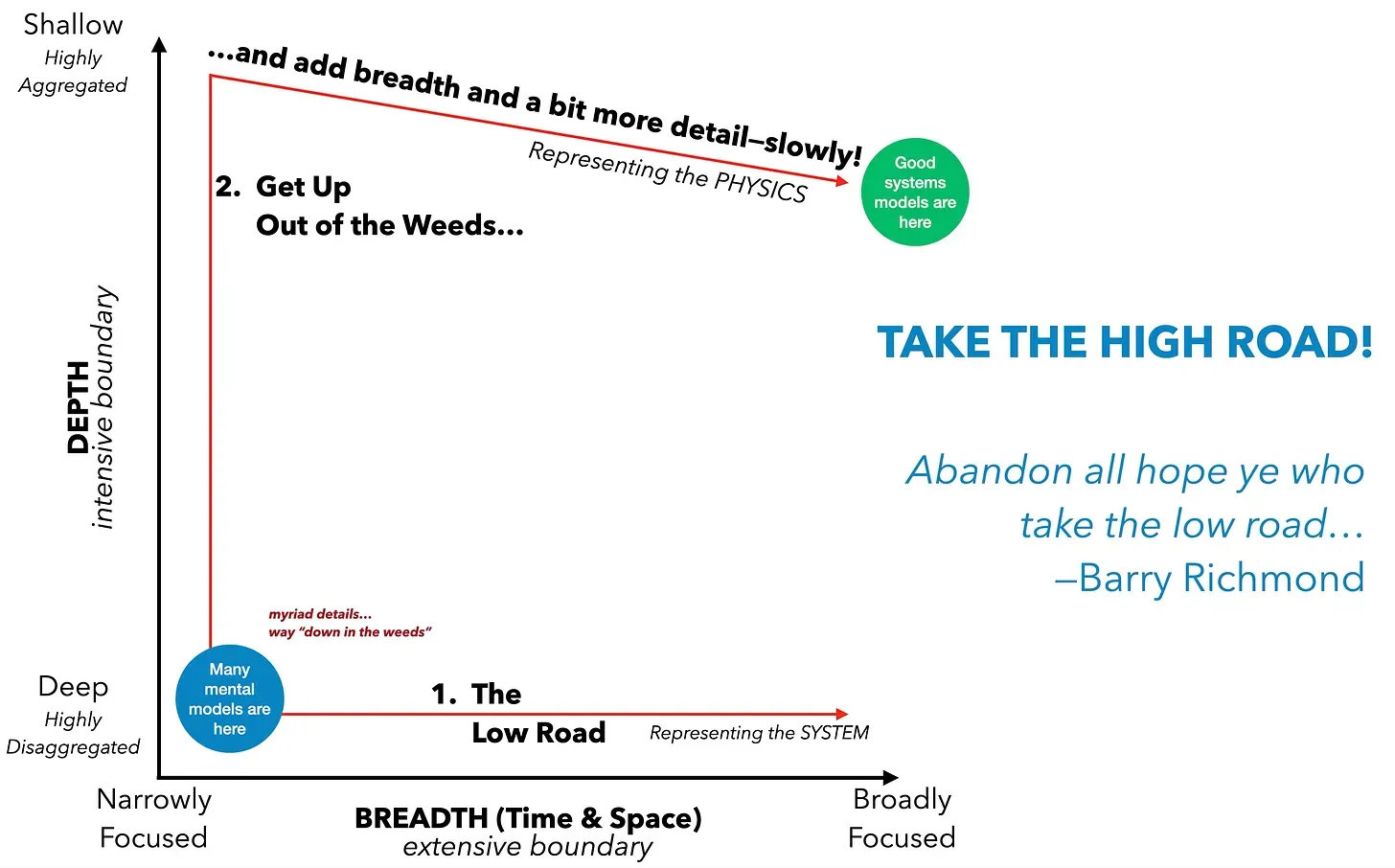 The High Road process involves sharing the initial “starter map” or “starter model” with others. Does it provide a clear explanation of why the performance issue is occurring? What changes or additions are needed? Make small adjustments and share the updated model for testing.
Keep adding more details a little at a time. This is the gradual descent in the diagram labeled “and add breadth and a bit more detail — slowly”.
Apply OPERATIONAL Thinking when adding more elements. Answer the question: “Does this contribute to the physics of the challenge — does it explain how the performance is generated?”
When you can finally answer the question “Does this describe the essential drivers of the performance issue?” with “Yes!”, it’s time to stop mapping (or whatever SysQ analysis process you’re applying.
Then use the map or analysis to start exploring ways to improve performance. You can look for solutions to close the future performance gap — you can find interventions to achieve your vision.
“A model should be as simple as possible, but no simpler.”
—Albert Einstein
The concept of two roads, and especially the High Road, was first developed by Barry Richmond while teaching system dynamics to his undergraduate class. The concept was so memorable that one of his students years later asked me if I had a Powerpoint slide with the roads on it.
Additional Resources
Books
Book title as link | Description
Articles
Article title as link | Description
Online Resources
Resource title as link | Description
Skills
🧠 DYNAMIC Thinking
SKILLS
Attribute of Skills
Lorem ipsum dolor sit amet, consectetur adipiscing elit, sed do eiusmod tempor incididunt ut labore et dolore magna aliqua
About
Overview of the attribute. Lorem ipsum dolor sit amet, consectetur adipiscing elit, sed do eiusmod tempor incididunt ut labore et dolore magna aliqua. Ut enim ad minim veniam, quis nostrud exercitation ullamco laboris nisi ut aliquip ex ea commodo consequat. Duis aute irure dolor in reprehenderit in voluptate velit esse cillum dolore eu fugiat nulla pariatur. Excepteur sint occaecat cupidatat non proident, sunt in culpa qui officia deserunt mollit anim id est laborum.
"We count by years, but we live by days. Rightfully, we should do both by seasons." — Ivan Doig, Dancing at the Rascal Fair
YOU’RE ON A COMPANY’S EXECUTIVE TEAM
Imagine you’re on the senior executive team of a multimillion-dollar company. Last quarter’s financial statement just came out, and it’s a doozy. Your company lost several million dollars. How do you feel?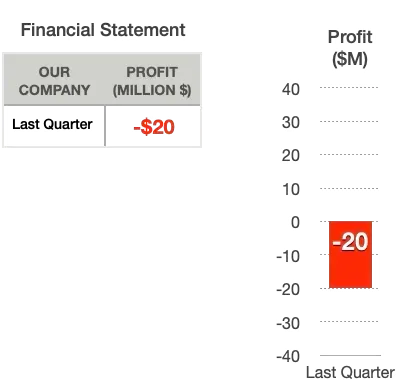 Bad, right? Worried?
What ideas / actions do you think the executive team would discuss and probably implement? If like most companies, you’d consider:
-
Lay offs?
-
Travel restrictions?
-
Training reductions?
-
Several other cost cutting strategies?
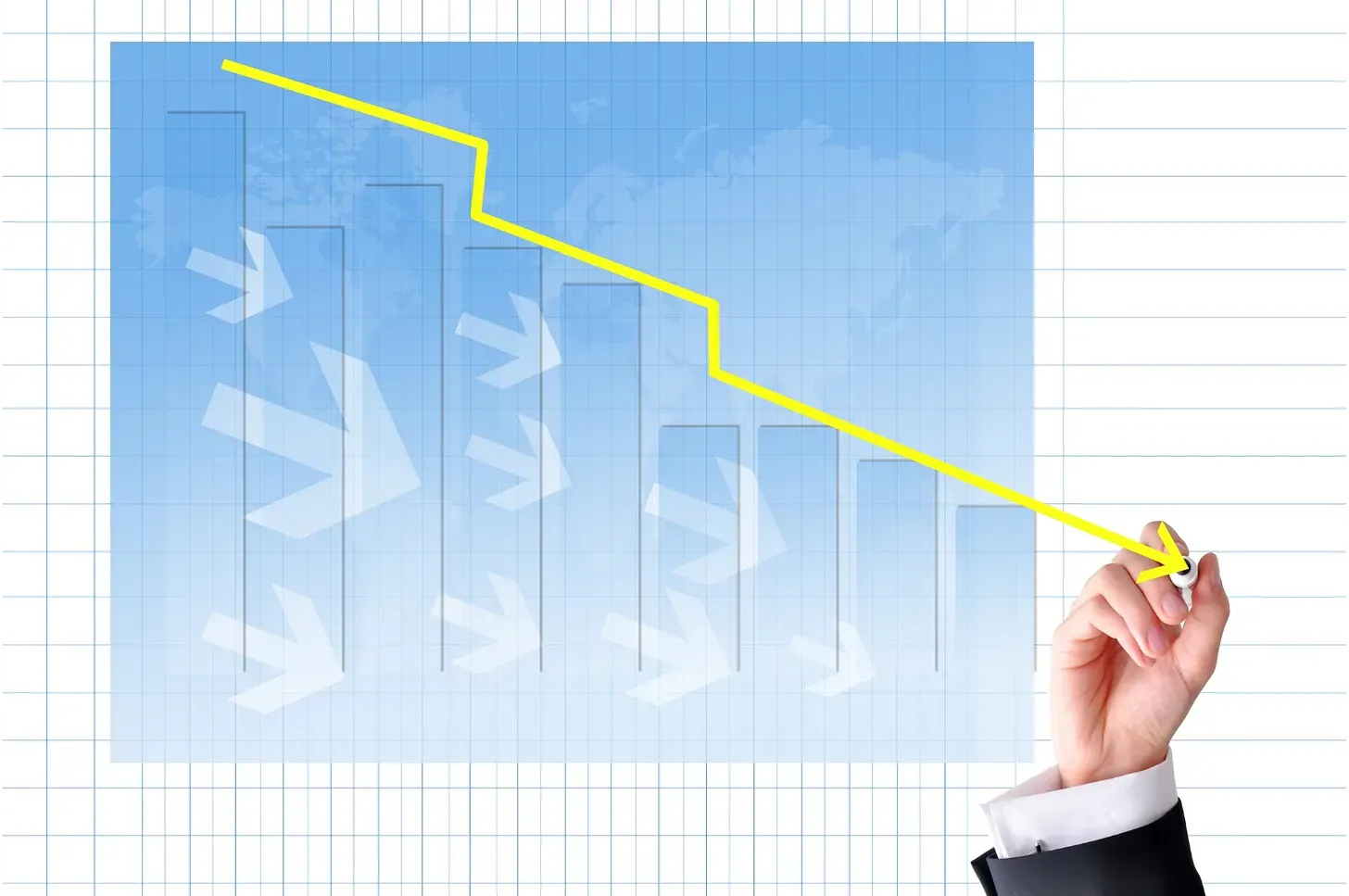
Now suppose you were shown the graph drawn below. Profit has plummeted over the past six months. 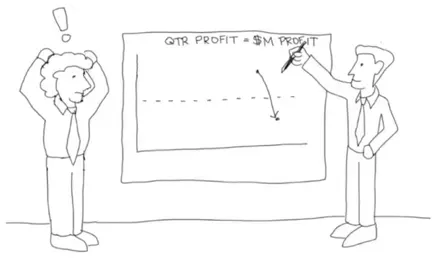
How do you feel now?
Even worse!
Why? Because it looks like things are getting worse–and rapidly!
What ideas or actions do you think the executive team would discuss and likely implement? If you’re like most companies, you might consider:
-
Hiring a consulting firm?
-
Closing part of the business?
-
Ending a product line?
And as an individual on the team you are concerned about a few things. There is probably going to be some personnel changes on the leadership team. The CEO might be let go. The board will certainly be looking for someone to blame.
You? You are most likely improving your resume, contacting friends and colleagues in your network–spending a lot of time on LinkedIn.
Now, suppose you’re shown this graph.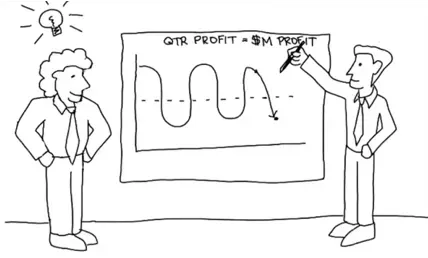 Now how do you feel?
Relieved, right? You may notice even a slight relaxing in the body now (if you were reacting at all to the exercise).
Why relieved?
Because, when viewed over a longer time horizon, the plummeting profits are part of a larger, predictable pattern.
If I asked you what type of business you’re running, you might say it’s a commodity business or more likely a seasonal business (since it has the same fluctuations at the same time each year). Maybe you’re a winter sports chain in New England, selling mostly skis and snowboards.
If it’s a seasonal business (like the winter sports chain) what solutions might you suggest?
You might suggest the following:
Closing the business in the summer months
Diversifying (sell golf clubs!)
Investing during the summer months to boost sales in the winter
Compare the solutions you would propose when analyzing the broader pattern to those you would suggest based solely on quarterly results (an event) or just a half-year’s worth of data (a small window).
The newer solutions are proactive, giving you more control and often revealing opportunities to generate additional revenue. In contrast, the reactive solutions focus on cutting costs.
The key difference between reactive and proactive solutions lies in your understanding of the business’s nature. It’s like seeing the slinky. You grasp the business’s structure, which is seasonal. Once you understand this structure, you can develop a much more effective solution tailored to your business.
EVENT THINKING VS. DYNAMIC THINKING
From a young age, our minds naturally focus on events and behaviors that occur right in front of us, both in space and time. This is not surprising, as humans are hardwired to prioritize the immediate and the present. The ability to hyper-focus on a predator that suddenly leaps from the bushes and react swiftly has proven beneficial to our species. There’s no need to meticulously chart the long-term history of predators leaping from bushes and consuming humans; the immediate response is sufficient: run!
What sets humans apart from other animals is an additional skill: the ability to discern patterns and make predictions. This higher level of consciousness, our meta-level thinking, is essential for addressing adaptive challenges. Our mental models must also include the capacity to represent patterns and make predictions.
In the context of terrorism, it is common in the United States to focus on a single event like 9/11, while overlooking the long history of observable behaviors that could have predicted it. There had been escalating tensions, punctuated by events such as the bombing of the USS Cole and the subsequent US response, as well as actions by the US that supported those considered enemies of terrorist organizations. Adopting a broader, longer-term perspective enhances the quality of any mental model attempting to understand the expansion of terrorism—it helps us identify the causal structures driving it.
Organizations often focus on recent events, such as the last quarter’s profit margin, this week’s layoffs, or current scandals. For instance, the 2008 mortgage crisis in the US (and globally) is a notable example. Initially, in mid-2008, people believed it was a recent phenomenon, likely due to poor management decisions by a few. However, a longer-term perspective reveals that the US economy since the 2000 “sell-off” was stimulated by lower interest rates set by the Federal Reserve. Additionally, granting subprime loans increased at a much faster rate than disposable incomes could sustain. In response, the Federal Reserve resorted to lowering interest rates once again to address the crisis.
The power of an event is undeniable, but unfortunately, we often react impulsively to it. Layoffs, reassignments, extra bureaucratic oversight, and even military invasions are common knee-jerk responses. However, understanding the world and its causes requires the ability to identify patterns of behavior.
REDUCING YOUR STATE’S MEDICAL COSTS
You’re working on your state’s initiative to reverse the rising medical costs. You’ve selected two states to benchmark, and based on their performance, you’ll contact your counterpart in each state to learn from their strategies.
Here are the per capita medical costs for two states. Which one, based solely on this data, would you choose as your benchmark for “best practices”?
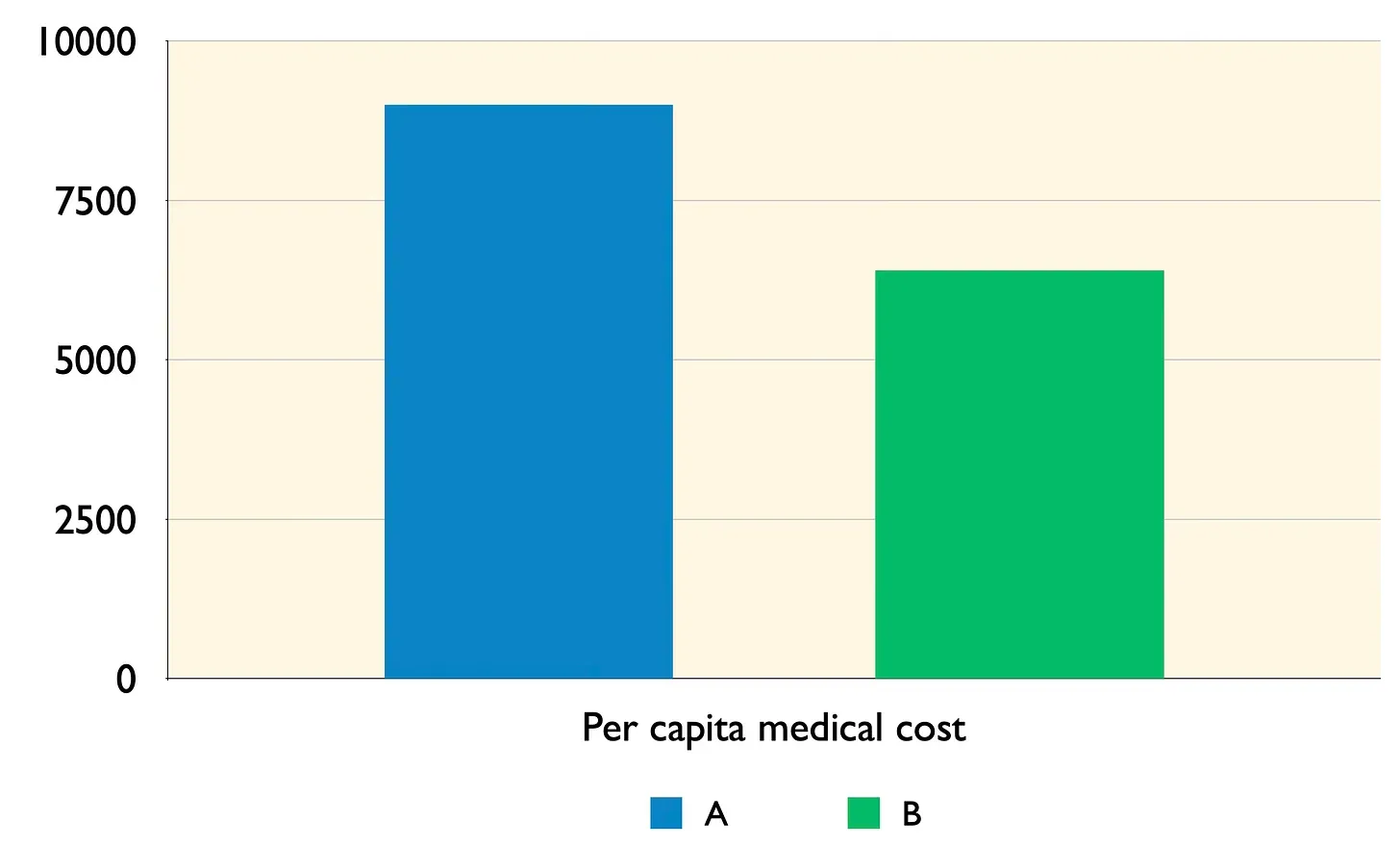
he obvious answer is State B.
However, before you draft an email to your counterpart in State B, your assistant bursts into the room with this chart. Now, which state should you contact to learn from their successful practices?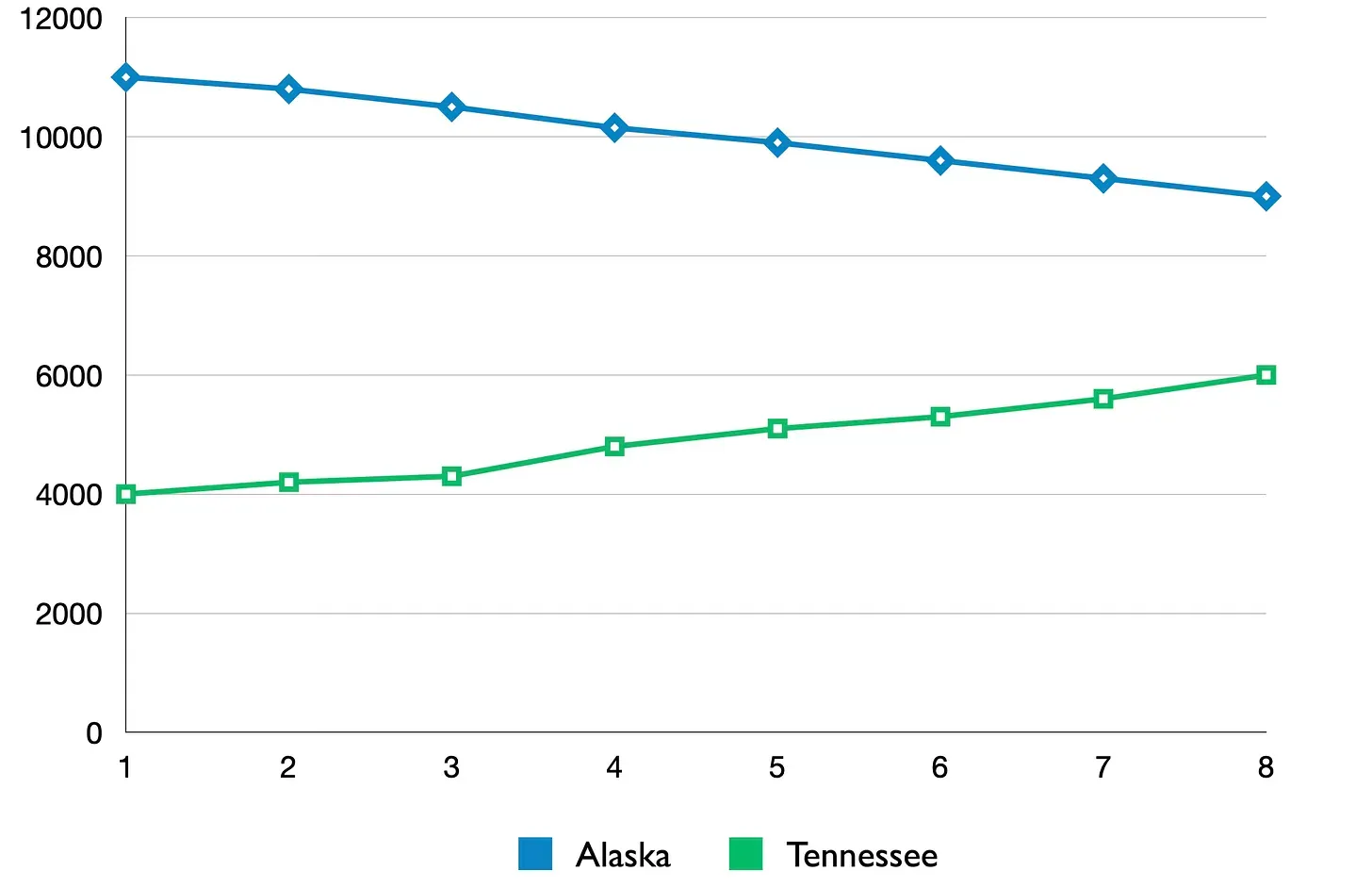
This time the answer is State A.
This illustrates why it’s often beneficial to analyze metrics through the DYNAMIC Thinking lens. First, relying solely on “point in time” data can lead to incorrect conclusions. We frequently make decisions based on narrow time slices of data, which could be detrimental.
Second, comparisons between similar entities, such as states vs. states, cities vs. cities, or countries vs. countries, that only use single numbers can be misleading. Even if two states have the same per capita medical costs, if their trends are similar to those observed here, one may be experiencing rapid deterioration. They are not comparable at all.
Trend lines, on the other hand, often trigger deeper, more rigorous mental models. They provide an operational narrative that enhances our thinking, decisions, and strategies. In this case, observing the trends revealed a story about the direction of performance and clarified the clear winner.
So a good SysQ tenet is:
When something’s important, look at it as a trend over time.
TIME DELAYS: ANOTHER REASON WE NEED DYNAMIC THINKING
In many cases, decisions made today may not have a desired impact on the organization for years. For instance, the Beer Game, a popular learning tool, illustrates our inability to comprehend time delays. Thousands of executives, MBA students, engineers, and others who have played this game have struggled to manage their inventories, even when the retail demand is linear and predictable. Anyone who has played this game understands how inherent time delays in a system’s structure contribute to its performance.
This common limitation also affects our understanding of climate change. John Sterman and Linda Booth-Sweeney have shown that a majority of their subjects (MIT students) cannot predict how long it will take a decrease in carbon emissions rates to impact global climate temperatures, even when the assumptions are clearly stated.1
Ignoring time delays is a major contributor to the planning fallacy. This fallacy occurs when our predictions about the time required to complete a future task are overly optimistic, leading us to underestimate the actual time needed.
Overlooking time delays often results in the common “worse before better” dynamic when implementing public policies or organizational improvements. Public sector managers, rightly so given the public’s understanding of dynamics, avoid policies that may eventually improve situations in the long run but may worsen conditions in the short term.2
THE SHAPE OF A MOVIE
In 2017, we witnessed a plethora of extraordinary yet peculiar movies. Among them, The Shape of Water emerged as the most peculiar of all, potentially claiming the coveted Academy Award for Best Picture.

Its premise, centered around a mute woman named Elisa’s profound love for a creature that resembles a fish more than a human, may initially appear absurd or even laughable. However, this film achieved remarkable success, garnering numerous accolades and captivating audiences.
The trend line for her love of the water man is shown here.
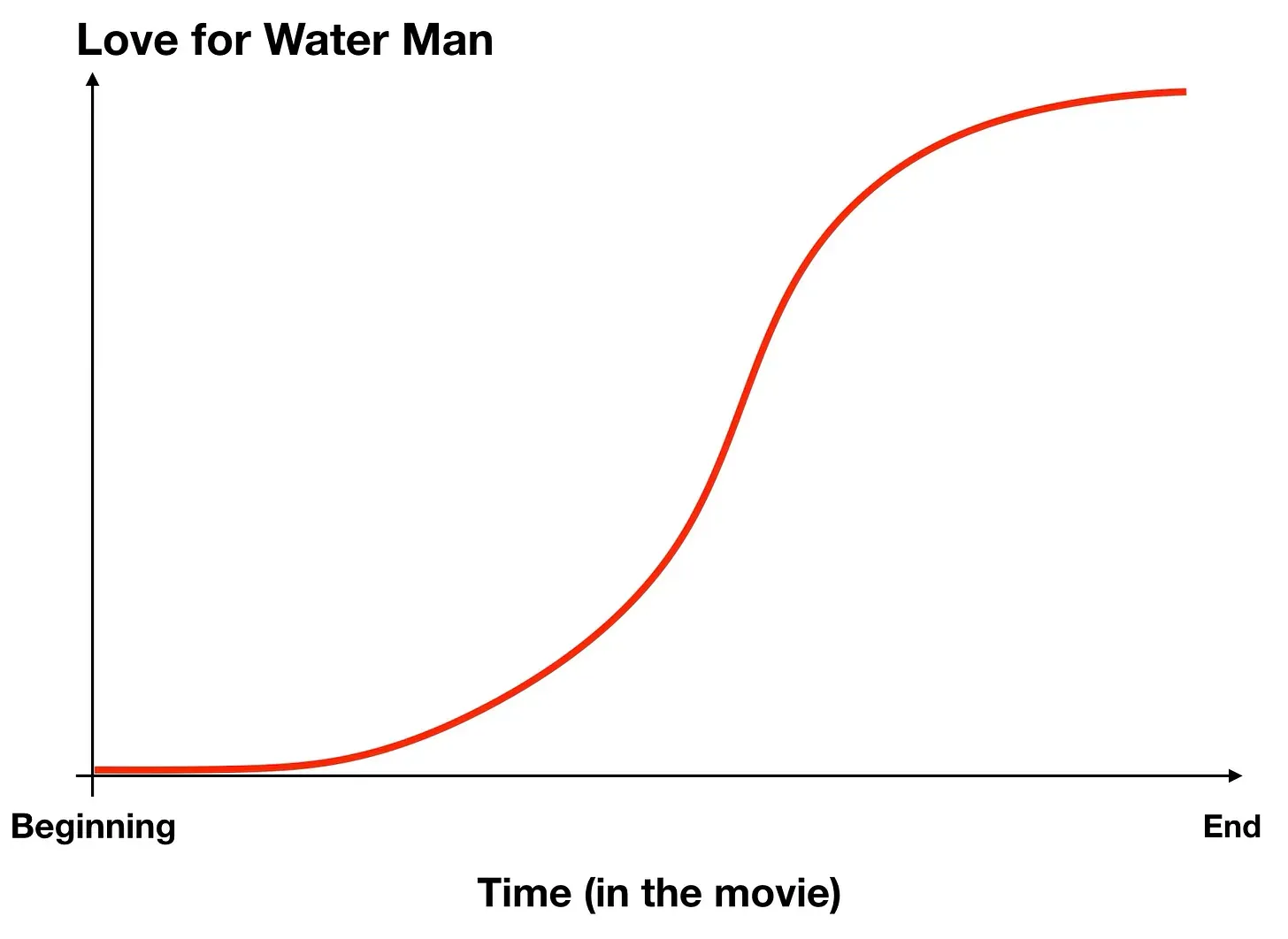
The Shape of Water’s success lies in its ability to gradually reveal credible reasons for Elisa’s growing affection for the water-dwelling entity. This gradual progression allows viewers to comprehend and even predict her actions throughout the movie. If you were to watch only the last third of the film, you might find the scenes so absurd that they would be difficult to take seriously, potentially leading you to leave the theater.
However, by watching the entire movie from the beginning, you are presented with a rational, rigorous, and dynamic mental model that enables you to grasp and even anticipate the protagonist’s actions.
STARTING A SYSQ ANALYSIS? FIND THE PLOT FIRST!
At the outset of every SysQ initiative, establish a clear purpose. Collaborate with your team members and stakeholders who need to be involved. Ensure that everyone is aligned in understanding the purpose of the mapping, modeling, or SysQ analysis.
The purpose is to comprehend the underlying causal factors that contribute to ____________. This knowledge will enable us to develop more effective strategies, policies, or levers to influence ____________ in the future.
While verbal descriptions can suffice, visualizing trends over time through a trend graph can significantly enhance the impact and utility of the analysis, particularly in collaborative settings.
OPERATIONAL THINKING — FOCUSING ON THE PHYSICS — REQUIRES CLARITY ON THE TRENDS
OPERATIONAL Thinking — focusing on the physics — is fundamental to high SysQ and applying it involves gaining a comprehensive understanding of the systemic structure that generates the desired behavior. Clarity on the behavior is not merely a desirable outcome but a prerequisite for effective SysQ application.
The process of clarifying the trends, drawing and agreeing on these trends, aligns everyone on the same page regarding their underlying reasons for working together. It provides a clear vision, fostering strong motivation for collaboration. Therefore, I allocate significant time early in any consulting engagement to assist my clients in achieving vivid and rigorous clarity on the purpose: the trends they intend to influence.
ADDITIONAL BENEFITS OF DRAWING TRENDS OF INTEREST
Gaining clarity on trends helps focus effort and develop a vision of success. But it offers many other benefits as well.
Benefit 1
It automatically shifts collaborators into a generative process. Seeing a trend line prompts the mind to seek understanding. Why does this happen? This prompts us to delve into our mental model database, searching for past experiences that might explain it. We transition from reactive thinking—“How do I react to this?”—to becoming more inquisitive and reflective. We seek causality and explore what generates the behavior or enter a generative process.4
Benefit 2
It helps identify faulty thinking by comparing our perceived trends to what others believe or know. Sometimes, our assumptions are incorrect.
Let’s say I believe that our projects are taking increasingly longer to complete, perhaps because my last two actually did. I might suggest to colleagues we need to invest in some improvement, perhaps upgrade the IT system. Instead of promoting a solution to a nonexistent problem, if I drew a trend line similar to the one shown below, I could share with others, including those who have the data.
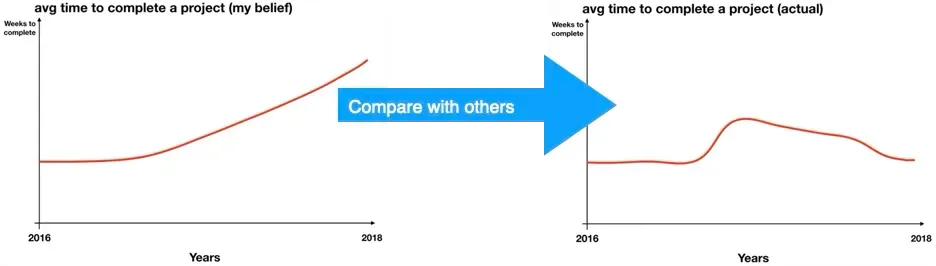
I’d then have the opportunity to learn why my assessment of reality was so far off. Yes, I’d have a learning moment. In this case I’d learn that I was still holding onto the increase in project time that happened late 2016 when several employees left. And even though project times had steadily improved since then, my confirmation bias kept me looking for the trend to go the other way. In this case, I learned something about myself.
I’ve seen the process of drawing trends help legislators who are normally disagreeable with one another become collaborative because they had some inaccurate understanding corrected. If seen engineers show trend lines to management to help them become more concerned about where a staffing issue was likely trending in the not too far future.
Benefit 3
Asking others you wish to be part of the effort to draw trends they are most concerned with–trends that may not be ones you initially used in trying to motivate their involvement–may help you find common ground. It may also help you expand your field of vision.
TO LEARN MORE ABOUT USING TREND GRAPHS
Check out this substack’s resources section to learn about several trend graph types you’ll find useful across a diverse range of purposes and activities.
1
J. Sterman and L. Booth Sweeney, Understanding public complacency about climate change: adults’ mental models of climate change violate conservation of matter, Springer Netherlands, Vol. 80, Numbers 3-4
2
Soderquist, C. Facilitative Modeling: Using Small Models to Generate Big Insights, The Systems Thinker, Pegasus Communications, December, 2003
3
Forbes, 'The Shape Of Water' 4K Blu-ray Review: The Ultimate Wet Dream, Mar 19, 2018, https://www.forbes.com/sites/johnarcher/2018/03/19/the-shape-of-water-4k-blu-ray-review-the-ultimate-wet-dream/
4
Calancie L, Anderson S, Branscomb J, Apostolico AA, Lich KH. Using Behavior Over Time Graphs to Spur Systems Thinking Among Public Health Practitioners. Prev Chronic Dis 2018;15:170254. DOI: http://dx.doi.org/10.5888/pcd15.170254.
The authors used trend graphs with teams in maternal and child health. 86% of participants found the technique improved their thinking and engagement enough to indicate they would use these tools after the workshop.
Additional Resources
Books
Book title as link | Description
Articles
Article title as link | Description
Online Resources
Resource title as link | Description

Tools
🛠️ Performance Framing Graph (PFG)
Tools
Performance Framing Graph (PFG).
A trend over time graph — or reference behavior pattern — of the system behavior(s) you want to understand and improve by applying SysQ
About
Performance Framing Graphs are powerful visual tools that map the interests, concerns, and performance metrics of diverse stakeholder groups within a system. These graphs reveal interconnections among different perspectives, expanding everyone's field of vision beyond their immediate concerns. By visually representing each stakeholder's key metrics over time, Performance Framing Graphs (PFGs) can:
-
facilitate cross-boundary collaboration
-
highlight potential tensions and synergies
-
support the development of more inclusive strategies
PFGs are particularly valuable in addressing complex adaptive challenges that span organizational boundaries because they translate diverse perspectives into actionable insights, balanced scorecards, and comprehensive performance indicators that reflect the whole system rather than isolated parts.

Case Studies
Private Sector | Production and Order Fulfillment for a Multinational Engine Company
A cross-siloed management team at an engine production company was assigned the task of improving production. The concerning issue was that average time between receiving an order and fulfilling it had been steadily climbing (with seasonality) over the past few years.
Highlights
Each team member first created their proposed most important performance framing graph. Some were concerned with revenue loss. Others focused on customer satisfaction. Others believed maintaining supply inventory was the most important. Through small and large group discussion, the team members shared their individual graphs, explored similarities and differences, and refined their thinking into a single graph.
The final graph (shown above) was a normalized performance measure (average weeks in the backlog). They were focused on quarterly reporting, so used quarters as the unit of time. Although there was some seasonality to the trend as pictured by oscillations, the average was steadily climbing.
There was some evidence to indicate that customer satisfaction and sales would decrease if average weeks approached 3 weeks. They were approaching this limit at an alarming rate. The price paid might be significantly less sales, lower profitability and dissatisfied shareholders.
The team’s desired future was to bring average weeks in backlog to less than historical levels. Discussion led to more realistic expectations — their desired future indicated that an effective strategy might take a few months before it had an impact. Team members assumed improvement would ultimately exhibit diminishing returns as the strategy would cause average weeks to reach a new floor. For simplicity, they left out seasonality in their future vision.
The graph provided the key performance measure the system dynamics model must explain — what policies, decisions and investments are responsible for the performance and what changes must be made to create their vision of a new and much lower floor.

Testimonials
Clients