
Child Welfare Ecosystem Transformation Project
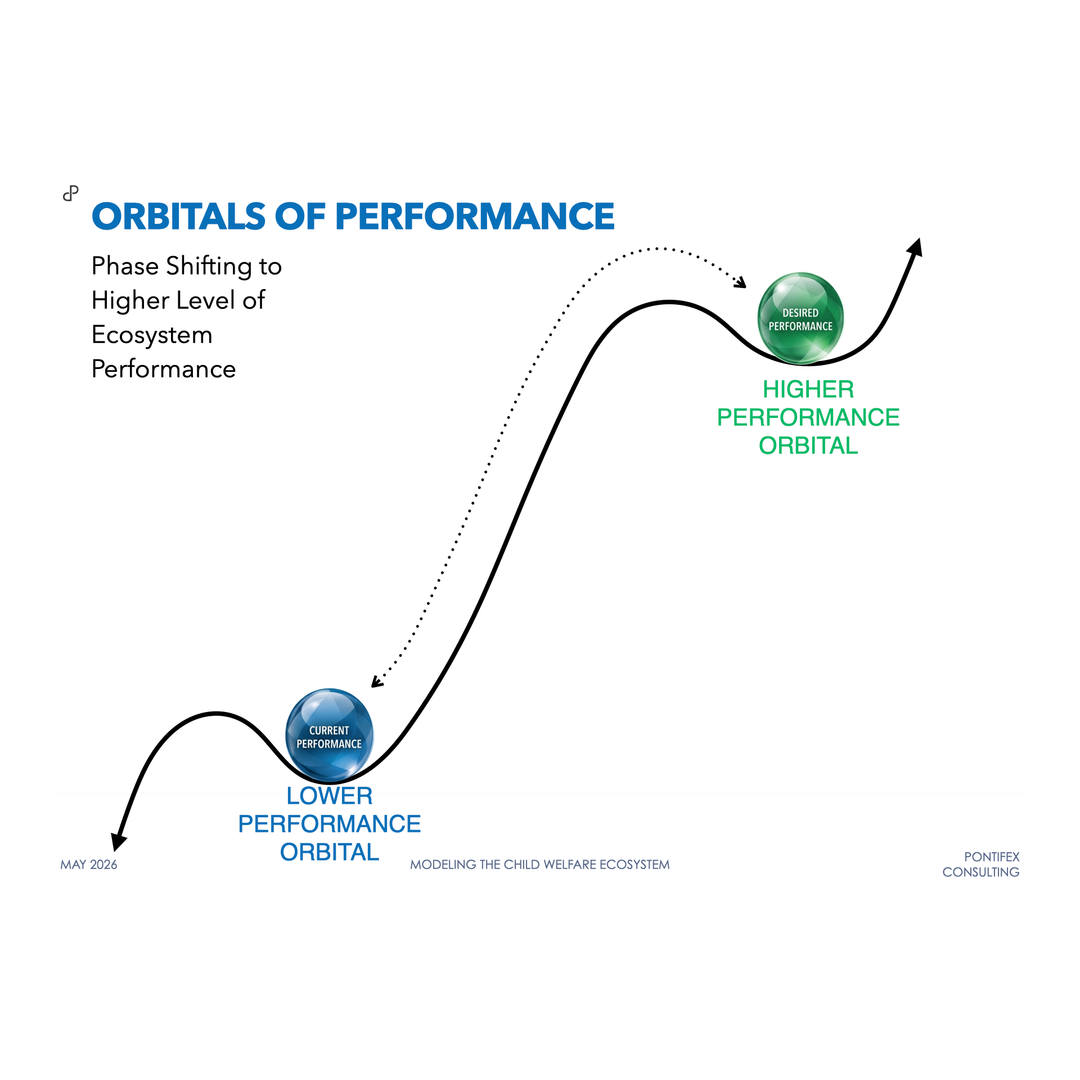
Applying system dynamics modeling and adaptive leadership to the child welfare ecosystem
SESSION 2: MODEL SCOPING (VIRTUAL) JUNE 26, 2026
(A PDF session summary is at the bottom of this section.)
On June 26th, the steering team gathered virtually to explore and hone in on model scope and purpose.
A Glimpse of What's Possible: The KIN-First Story
The session opened with a presentation from Marina Nitze and Doug Klinman on the Kin-First initiative — worth sitting with carefully, because it illustrates something fundamental about how systems change.
Most improvement efforts operate inside a system's existing logic. You work harder, allocate more resources, tighten up processes. Same goal, better execution. Kin-First started by changing the goal itself, then watched the system reorganize around that new target. That's double-loop learning, and it produces the kind of step-change improvement that incremental optimization simply cannot reach. The Kin-First results made the point concretely. Thinking new has to come before acting new.
Choosing What to Watch: The Heads-Up Display Exercise
With a clearer sense of what high performance can look like, participants turned to a practical question: how would we know if we were getting there?
Small groups worked through a structured exercise to identify a focused set of indicators — a "heads-up display" — that, if performing well, signal the broader system is on track. The large-group debrief surfaced recurring priorities: children in poverty as a critical leading indicator, along with substance use disorders, neglect rates, and family access to support. These will be analyzed and reported here as the work progresses.
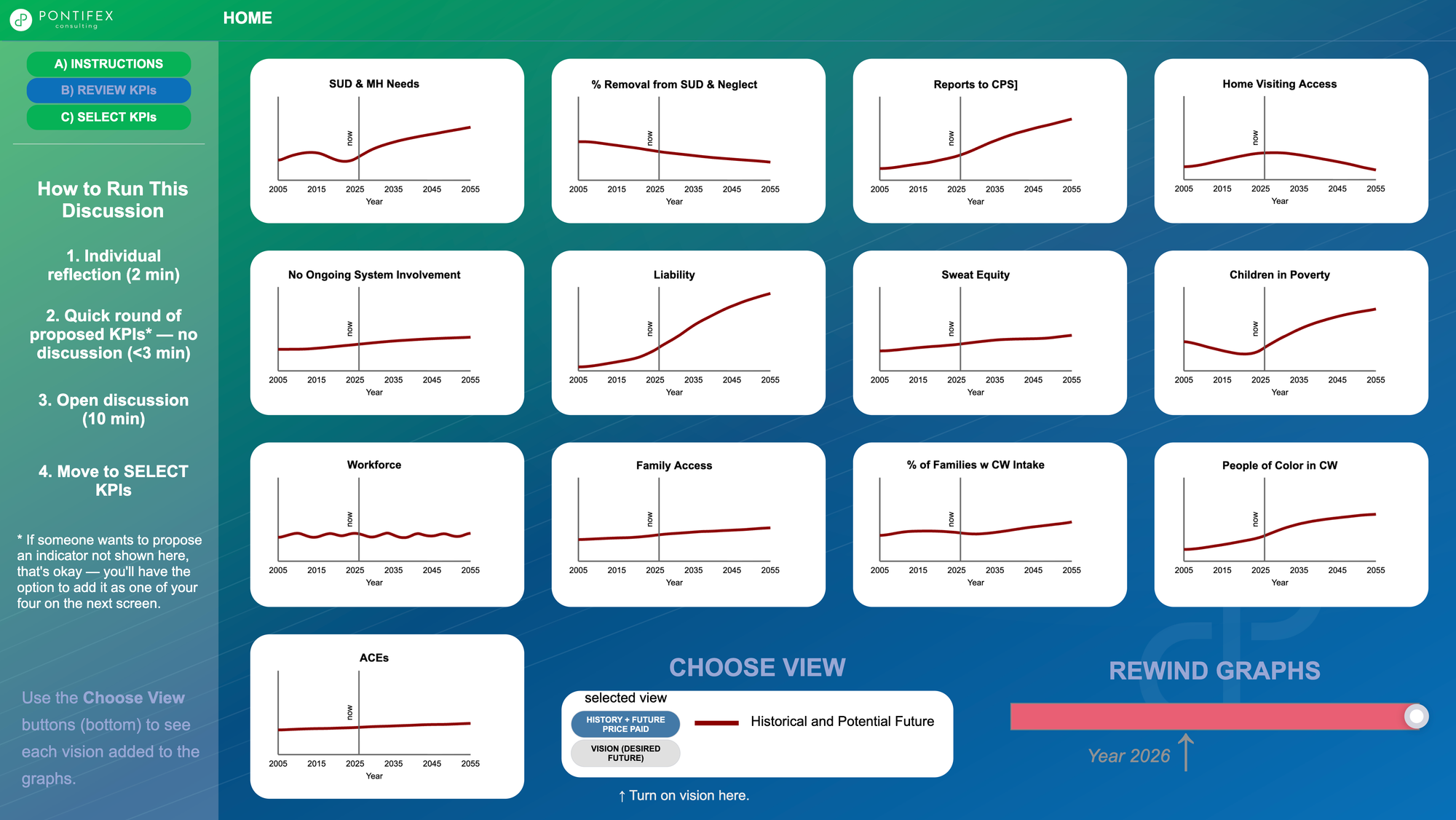
You can review this KPI exercise in the link below as EXERCISE 1 in the online interactive exercise file.
Holding the Bigger Picture
The third thread addressed something that often gets lost in system improvement work: the boundaries of the vision itself.
Most mental models are implicitly narrow — bounded to the next budget cycle and the formal child welfare system. The vision the team is working toward is intentionally broader. Over time, the goal is to see the gap between the need for child welfare capacity and the sufficiency of available services begin to close — through near-term efficiency gains and long-term prevention that reduces overall need. Neither view is sufficient alone. This expansive framing will serve as the orienting measure of what constitutes meaningful, lasting improvement.
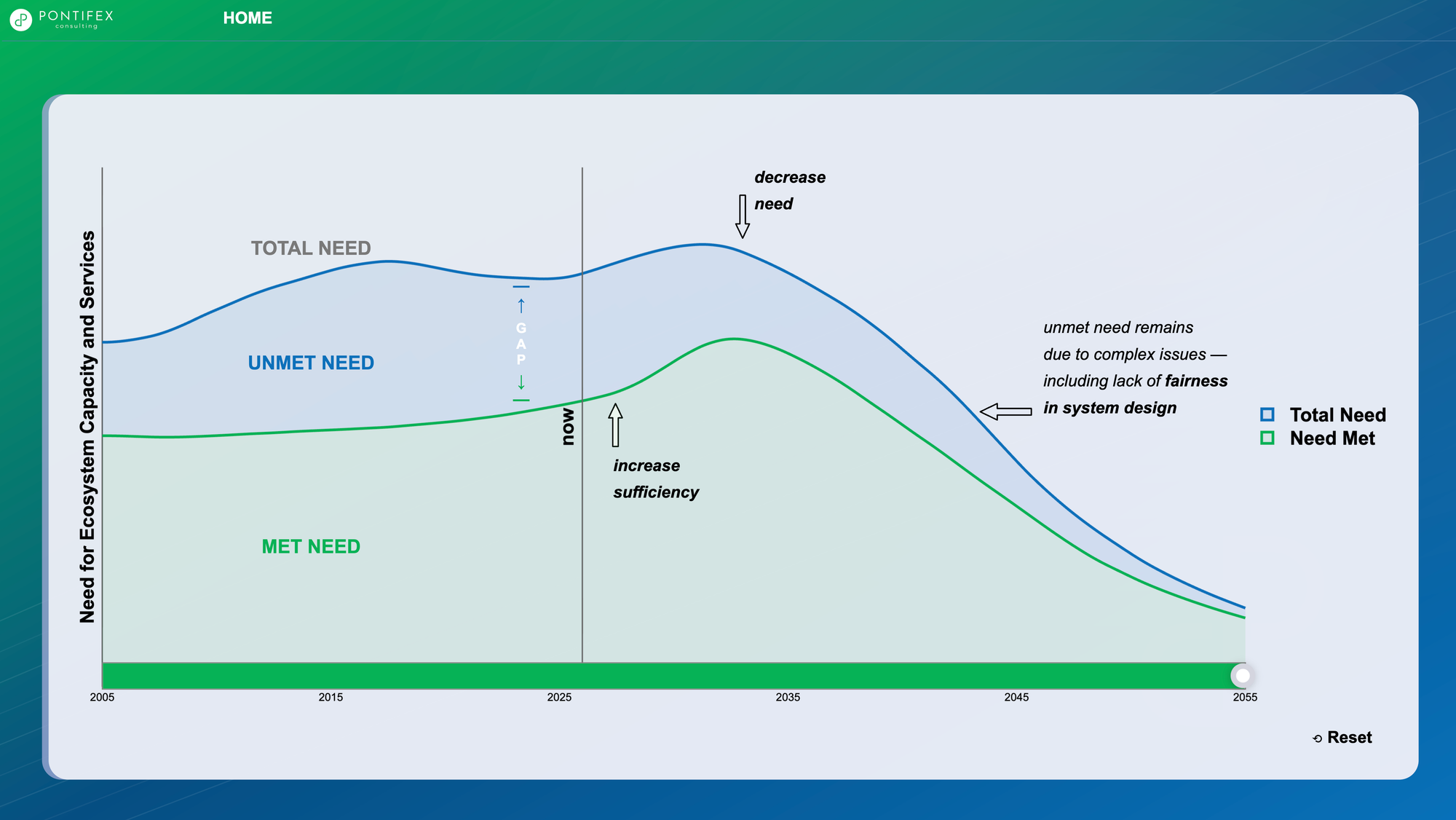
You can review this expansive vision in the link below as EXERCISE 2 in the online interactive exercise file.
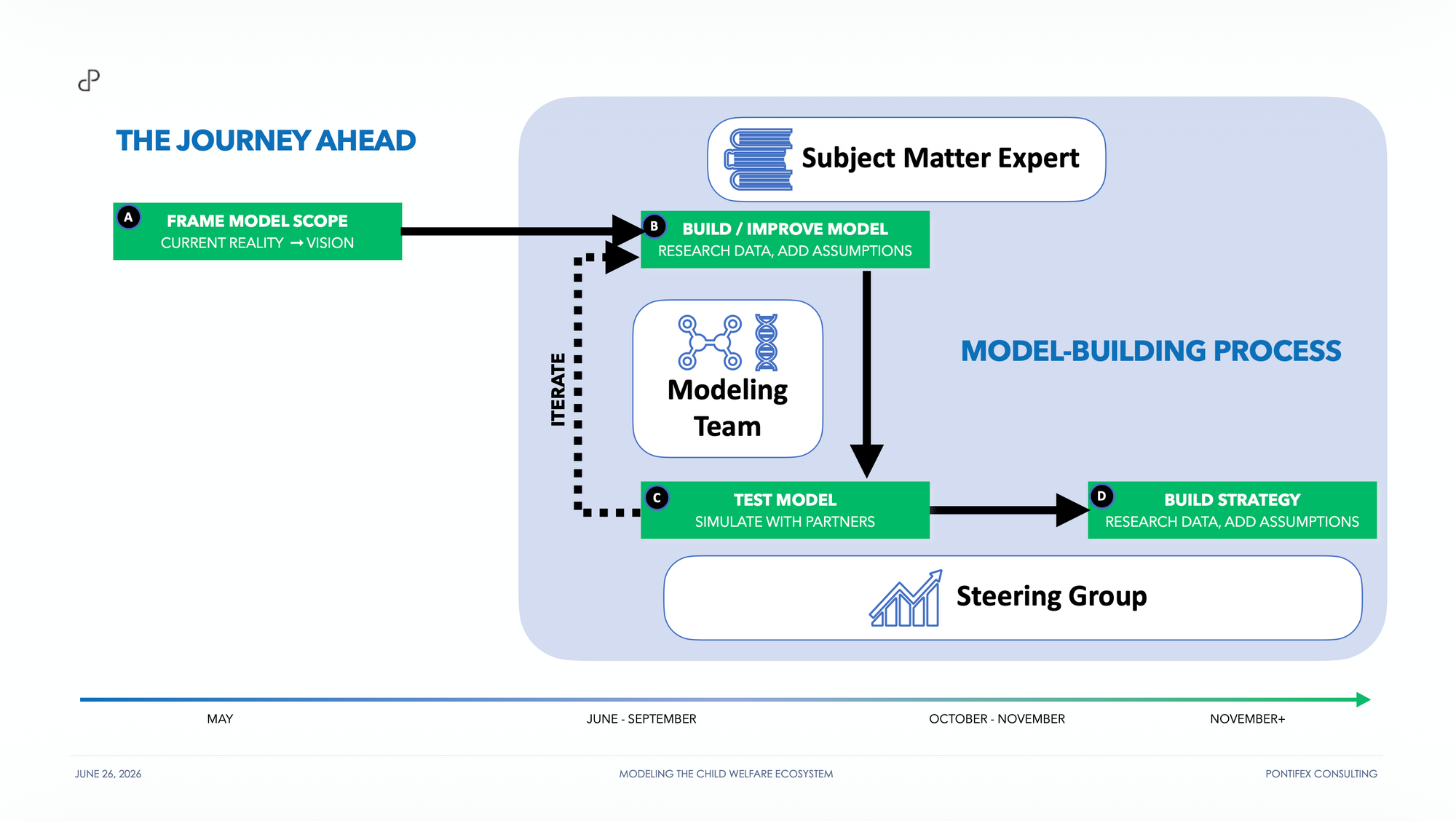
What Comes Next: Roles in the Modeling Process
The session closed with an orientation to how participants can contribute going forward. Three roles were outlined.
Subject matter experts contribute on a just-in-time, just-what's-needed basis. The steering team — this group — meets monthly to ensure the model stays on track to produce useful strategy. The most intensive role is modeling team member: meeting with the lead modeler every two weeks, developing working knowledge of the model's assumptions, and contributing directly to the modeling work.
Session Summary (including Heads Up Displays)
Review a summary of the meeting, including each small group's proposed "heads up" display.
Slides + Interactive Exercise
The slides from the session are below, along with a link to the interactive exercise.
SESSION 1: MODEL SCOPING (IN-PERSON) MAY 14, 2026
Orbital Shift: Closing the Gap Between Current Reality and Vision of Ecosystem Performance
The following video reviews the concept of Ecosystem Transformation as a shift in orbitals of performance. The video includes an additional example of changing thinking to change performance. The video concludes with an operational picture of a vision for the child welfare ecosystem performing at the higher level of performance orbital.
REVIEW: Workshop #1
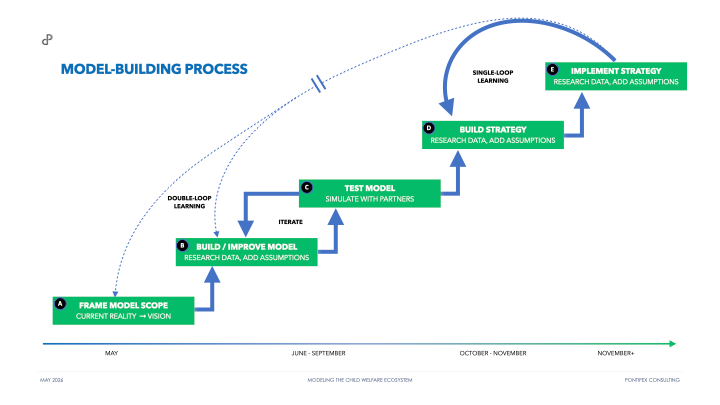
Slides from WORKSHOP 1: ESTABLISH MODEL PURPOSE
Below are the slides presented at the May 14, 2026 session at The Ballmer Group office. Reach out to me (Chris) if you have any questions and needs concerning the slides.
GROUP WORK
The pdf below includes the Visioning Exercise (Rare/Common/Guaranteed) + each group's framing graph(s).
PRE-WORK: Session 1
Greetings! I am Chris Soderquist.
I am looking forward to meeting with all of you many for the first time on Thursday, May 14th, at the Ballmer Group's offices.
I expect the day to fly by quickly, but I'm heartened to know that many of you, or all of you, will continue to be along for the journey moving forward if you choose.
EXPECTATIONS
At this session, we will be generating your insights into how to best model the ecosystem responsible for child welfare. This model will be converted into an online scenario planning tool that is open to the public and anyone could use to understand the challenges and opportunities for ecosystem transformation.
You will learn a lot more about the model and how we will build it together at the session.
Prior to this session, it would be helpful for you to do some reading, covering some important concepts, as well as reflect on some questions and exercises. Although not necessary, doing these will prepare you to hit the ground running in the session and create a more efficient, effective session.
YOUR MISSION… SHOULD YOU CHOOSE TO ACCEPT IT
Here is a list of pre-work activities that will best prepare you for the session:
- Read The Three Horizons Framework article by Jennifer Pahlka.
- There are two sets of questions to reflect on that are below. It'd be helpful to reflect on those questions.
Extra Credit
The above two are the most important pre-work activities. If you want extra credit, you can also do the following:
- Watch the video called Seeing with New Eyes that's described in the Applying Dynamic Thinking section.
- Read the excerpt from the System Transformation Guide on "Framing Graphs". Apply that later and develop your own framing graph(s).
That's it for prep..and it is optional, but very helpful!
RESOURCES
The Three Horizons Framework
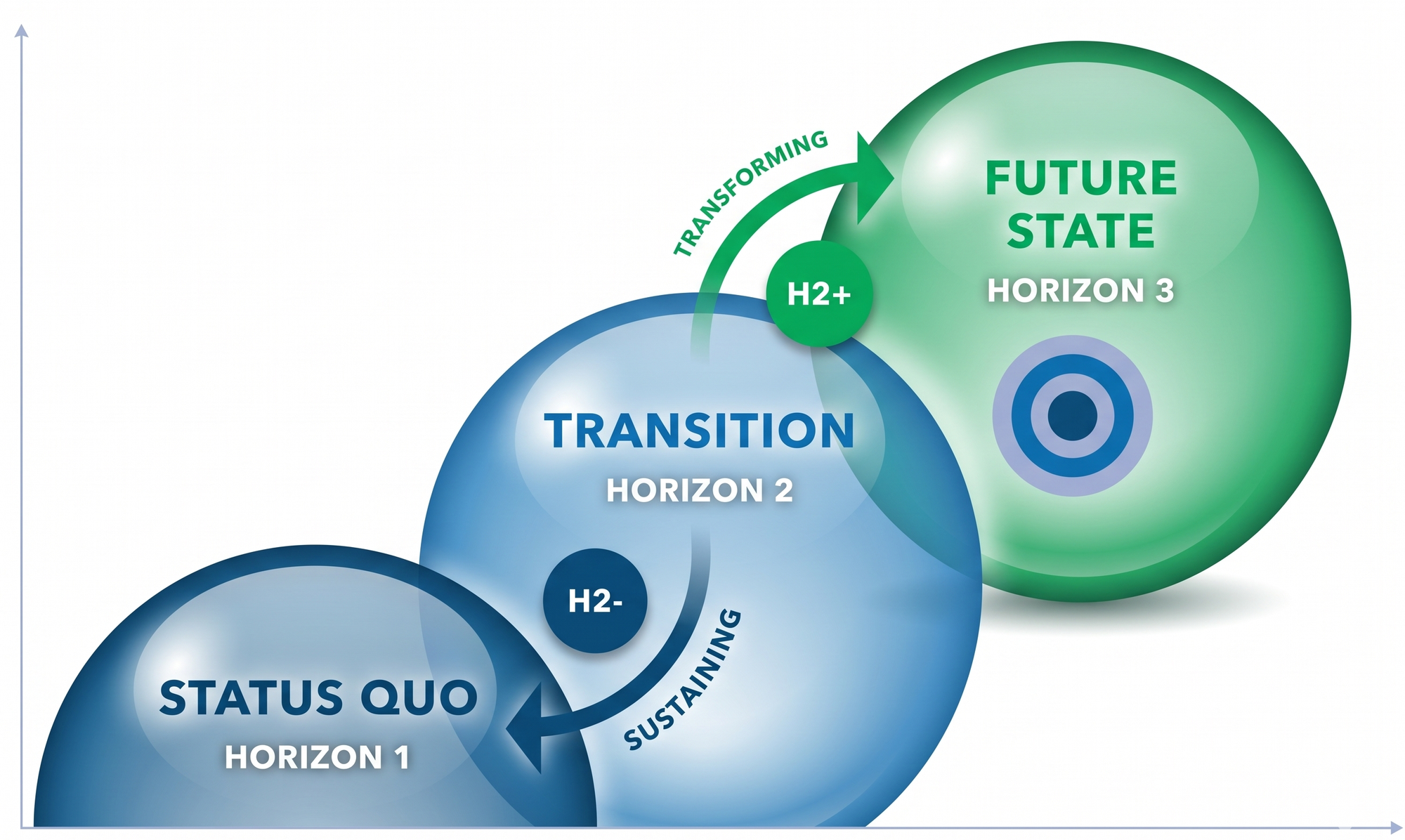
The Three Horizons framework offers a clarifying lens for anyone trying to understand why child welfare systems so often feel stuck despite genuine investment and real effort. It reveals that most innovations in struggling systems function as "pressure valves" — they relieve enough pain to reduce urgency for deeper change, but leave the underlying architecture intact. For the Child Welfare Funders Collaborative's Modeling and Systems Transformation Project, this framework raises an uncomfortable but essential question: are our investments releasing pressure or building it? The answer matters enormously, because only one of those paths leads to the kind of systemic transformation we're actually after.
REFLECTION QUESTIONS
Your Vision for Transformation
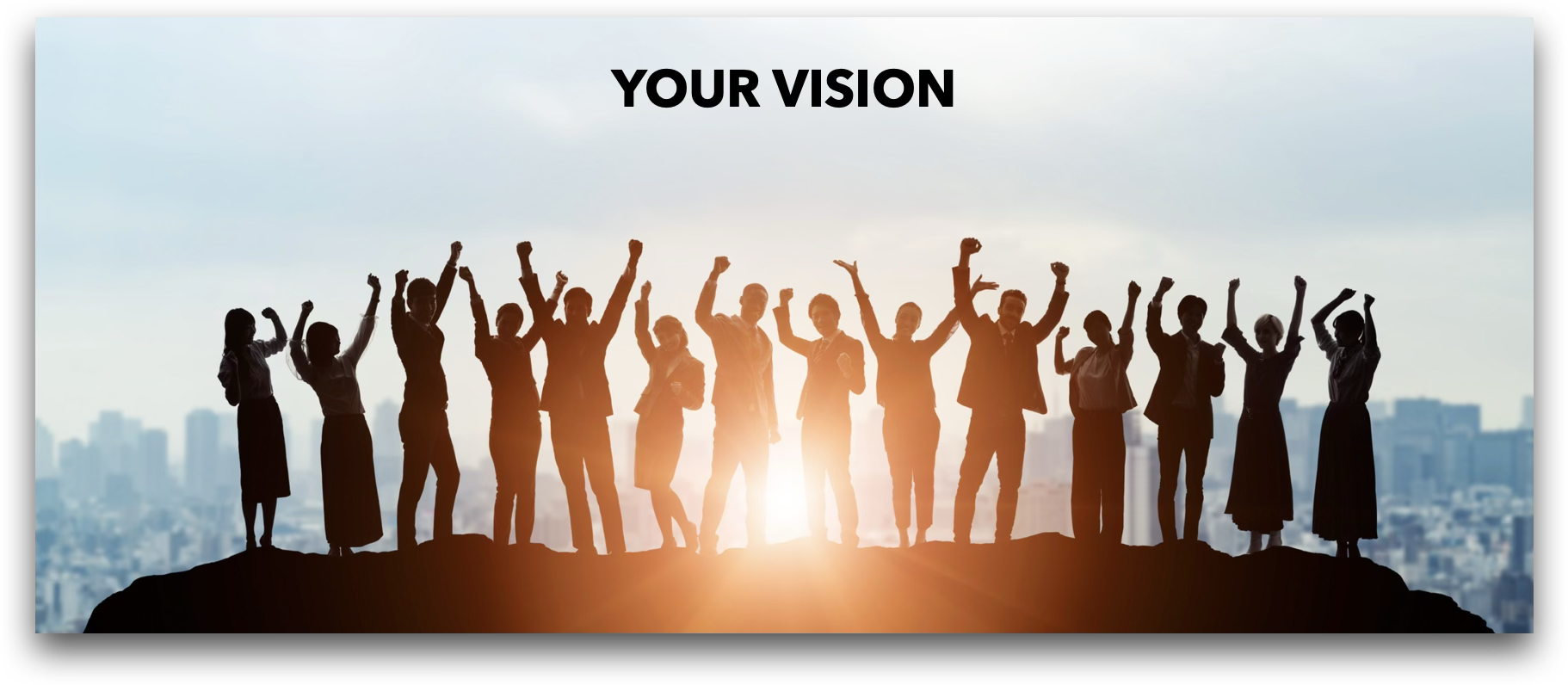
Assume the following. This group gathers 10 years from now to celebrate success beyond your wildest expectations.
- What are you SEEING that causes you to celebrate?
- What's HAPPENED between now and this celebration (in 10 years)?
Possible Challenges To Transformation
Now, imagine this group gathers 10 years from now and must analyze what went wrong.
- What CHALLENGES do you see now — or are on the horizon — that would prevent success? What prevents achieving your vision?
- What about the challenge(s) might be KEEPING YOU UP AT NIGHT?
VIDEO: Applying Dynamic Thinking
Seeing a system clearly is the first step toward changing it. At the upcoming workshop, we'll spend meaningful time looking at the child welfare ecosystem as a whole — not just snapshots, but trends over time. That means examining the performance measures we all care about, including ones that are harder to quantify but impossible to ignore: stigma, morale, trust, and the relational fabric that either strengthens systems together or quietly erodes them.
The short video below captures something important about why trends matter — and why the story data tells over time is often more revealing than any single data point. It's very important to move beyond Excel spreadsheets and bar charts when trying to transform systems.
After watching, we'd love for you to take a few minutes to complete the Framing Graphs exercise included in this packet. It's a simple but surprisingly powerful way to begin seeing your own corner of the system through fresh eyes — and it will make our time together at the workshop significantly richer. The exercise takes only a few minutes, but the thinking it generates will stay with you.
Extra, Extra Credit: Framing Graphs — Guidebook and Exercise
Before our next session, read the framing graphs excerpt from the system transformation guide (PDF below). Then try the individual exercise at the end: create at least one framing graph — maybe two or three — that captures either a challenge your system currently faces or a vision of where you'd like it to go.
The key question to sit with: What is the most important thing you'd want to measure? What performance indicator is currently moving in the wrong direction — and what would it look like if it turned around? Let that question guide what you put on the graph.
Come ready to share what you drew and why you chose it…and to see what others believe to be most indicative of the type of ecosystem you want to bring about in the future.